2507 Super Duplex Stainless Steel: High Strength and Corrosion Resistance for Severe Service
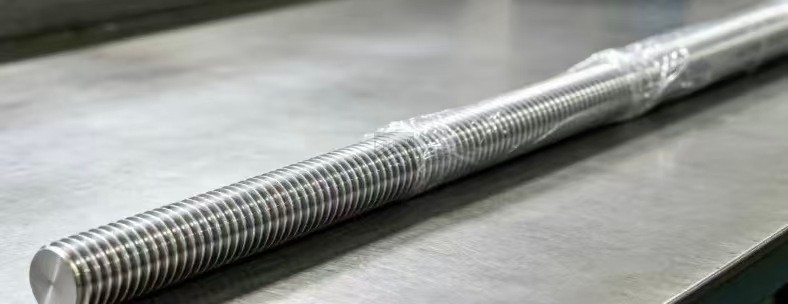
2507 Super Duplex Stainless Steel: High-Strength Stainless Steel for Severe Corrosive Environments
Release Date: October 20, 2026
2507 super duplex stainless steel, also known as UNS S32750 and EN 1.4410 stainless steel, is a high-performance stainless steel designed for severe corrosive environments. This super duplex stainless steel combines high strength, excellent chloride corrosion resistance, and dependable long-term service performance.
Compared with conventional austenitic stainless steel grades such as 304 stainless steel, 316 stainless steel, and 316L stainless steel, 2507 stainless steel delivers significantly higher mechanical strength and stronger resistance to pitting corrosion, crevice corrosion, and chloride stress corrosion cracking. It is widely selected for offshore oil and gas, seawater desalination, chemical processing, marine engineering, flue gas desulfurization, and high-pressure piping systems.
What Is 2507 Super Duplex Stainless Steel?
2507 stainless steel is a super duplex stainless steel with a balanced microstructure of approximately equal proportions of austenite and ferrite. This duplex stainless steel structure gives 2507 stainless steel the combined advantages of austenitic stainless steel and ferritic stainless steel.
The alloy contains high levels of chromium, nickel, molybdenum, and nitrogen. These alloying elements improve the corrosion resistance, mechanical strength, and stress corrosion cracking resistance of 2507 super duplex stainless steel. Its material design makes it particularly suitable for chloride-rich, high-pressure, and highly corrosive industrial environments.
Common designations include:
- UNS S32750
- EN 1.4410
- Super Duplex 2507
- 2507 duplex stainless steel
- 25Cr duplex stainless steel
Mechanical Properties of 2507 Stainless Steel
In the solution-annealed condition, 2507 super duplex stainless steel provides exceptional mechanical performance. Typical minimum mechanical properties include a 0.2% proof strength of 550 MPa, tensile strength above 800 MPa, and elongation of at least 25%.
The yield strength of 2507 stainless steel is approximately 2.5 times higher than that of 316L stainless steel. It also offers greater strength than standard 2205 duplex stainless steel. This high-strength stainless steel performance enables engineers to reduce material thickness while maintaining pressure capacity and structural integrity.
For pressure vessels, piping systems, heat exchangers, offshore platforms, and subsea equipment, thinner wall sections can reduce total equipment weight and material consumption. This is especially valuable in offshore and marine projects, where lifting capacity, installation cost, and structural weight are critical design factors.
Corrosion Resistance of 2507 Super Duplex Stainless Steel
One of the most important advantages of 2507 stainless steel is its superior corrosion resistance. With a pitting resistance equivalent number of PREN ≥42, 2507 super duplex stainless steel provides much stronger resistance to localized corrosion than 316L stainless steel and 2205 duplex stainless steel.
The high chromium, molybdenum, and nitrogen content helps 2507 stainless steel resist:
- Chloride-induced pitting corrosion
- Crevice corrosion
- Chloride stress corrosion cracking
- General corrosion in aggressive process media
- Corrosion fatigue in seawater service
- Erosion-corrosion in flowing fluids
This makes 2507 duplex stainless steel a preferred material for seawater pipelines, desalination equipment, marine pumps, chemical reactors, valve bodies, and high-chloride process systems.
2507 Stainless Steel for Seawater and Offshore Applications
Seawater is one of the most demanding service environments for stainless steel because of its high chloride content. Standard stainless steel grades such as 304 stainless steel and 316 stainless steel may experience pitting corrosion or crevice corrosion under prolonged seawater exposure.
2507 super duplex stainless steel is engineered to provide a more reliable solution for seawater systems. It is widely used in offshore seawater injection lines, seawater cooling systems, subsea piping, marine pump components, valves, fittings, and seawater reverse-osmosis desalination plants.
For offshore oil and gas applications, 2507 stainless steel offers a strong combination of corrosion resistance, high strength, and fatigue resistance. It can support long service life in systems exposed to seawater, elevated pressure, vibration, and fluctuating operating loads.
Stress Corrosion Cracking Resistance
Stress corrosion cracking is a major concern for conventional austenitic stainless steel in hot chloride environments. 2507 super duplex stainless steel offers excellent resistance to chloride stress corrosion cracking because of its duplex microstructure and alloy composition.
This performance makes 2507 duplex stainless steel especially suitable for chemical processing equipment, heat exchangers, pressure piping, desalination systems, and offshore production facilities. In sour-service environments containing hydrogen sulfide and carbon dioxide, 2507 stainless steel may be selected according to the applicable NACE and project material specifications.
Material selection should always consider temperature, chloride concentration, pH value, pressure, H₂S partial pressure, fabrication method, and welding condition.
Thermal and Physical Advantages of 2507 Duplex Stainless Steel
In addition to high strength and corrosion resistance, 2507 stainless steel offers useful physical properties for industrial equipment design. Its thermal conductivity is generally higher than that of common austenitic stainless steel, while its coefficient of thermal expansion is lower.
These characteristics can help reduce thermal stress and thermal-fatigue risk in heat exchangers, pressure equipment, and piping systems exposed to temperature cycles. The stable dimensional performance of 2507 super duplex stainless steel is valuable in demanding chemical, marine, and energy applications.
For continuous service, however, 2507 stainless steel is generally not recommended for temperatures above approximately 250°C. Extended exposure to elevated temperatures may cause brittle-phase precipitation, which can reduce toughness and corrosion resistance.
Available Forms of 2507 Stainless Steel
2507 super duplex stainless steel is available in a wide range of stainless steel product forms, including:
- 2507 stainless steel plate
- 2507 stainless steel sheet
- 2507 stainless steel round bar
- 2507 stainless steel seamless pipe
- 2507 stainless steel welded pipe
- 2507 stainless steel tube
- 2507 stainless steel fittings
- 2507 stainless steel flanges
- 2507 stainless steel forgings
- 2507 stainless steel valves and pump components
This product flexibility allows 2507 duplex stainless steel to be used in complete piping systems, pressure vessels, structural components, heat exchangers, and custom-machined equipment.
Welding and Fabrication of 2507 Stainless Steel
2507 super duplex stainless steel has established welding procedures, but welding control is essential to maintain the correct austenite-ferrite balance. Heat input, interpass temperature, filler metal selection, shielding gas, and post-weld cleaning should be controlled according to the applicable welding procedure specification.
Correct fabrication practices help preserve the corrosion resistance and mechanical properties of super duplex stainless steel. For critical applications, material traceability, positive material identification, corrosion testing, mechanical testing, and non-destructive testing are often required.
2507 vs. 2205 vs. 316L Stainless Steel
Compared with 316L stainless steel, 2507 stainless steel provides substantially higher yield strength and much better resistance to chloride corrosion. Compared with 2205 duplex stainless steel, 2507 super duplex stainless steel offers a higher PREN value and is better suited to more severe seawater and high-chloride conditions.
While 2507 stainless steel has a higher initial material cost than 304 stainless steel, 316L stainless steel, or 2205 stainless steel, it can lower total lifecycle cost in demanding environments. Longer service life, reduced maintenance, fewer shutdowns, and lower replacement frequency can make 2507 super duplex stainless steel a cost-effective engineering material.
Applications of 2507 Super Duplex Stainless Steel
2507 stainless steel is commonly used in:
- Offshore oil and gas platforms
- Subsea piping and manifolds
- Seawater injection systems
- Seawater desalination plants
- Reverse-osmosis equipment
- Flue gas desulfurization systems
- Chemical processing reactors
- High-pressure heat exchangers
- Marine pumps and valves
- Brine extraction and salt-processing equipment
- Pulp and paper industry equipment
- Environmental protection and water-treatment systems
Why Choose 2507 Stainless Steel?
2507 super duplex stainless steel is a reliable choice when ordinary stainless steel cannot meet the corrosion resistance or strength requirements of the application. Its exceptional resistance to chloride corrosion, high mechanical strength, and long-term reliability make it a leading stainless steel material for severe industrial service.
For projects involving seawater, brine, chlorides, high pressure, aggressive chemicals, or offshore exposure, 2507 duplex stainless steel provides a strong balance of performance, safety, and lifecycle value.
Keywords: 2507 super duplex stainless steel, 2507 stainless steel, UNS S32750, EN 1.4410, super duplex stainless steel, 2507 duplex stainless steel, 2507 stainless steel pipe, 2507 stainless steel plate, seawater corrosion resistant stainless steel, offshore stainless steel, chloride corrosion resistant steel, high-strength stainless steel, duplex stainless steel supplier