Stainless Steel Raw Materials and Precision Machining
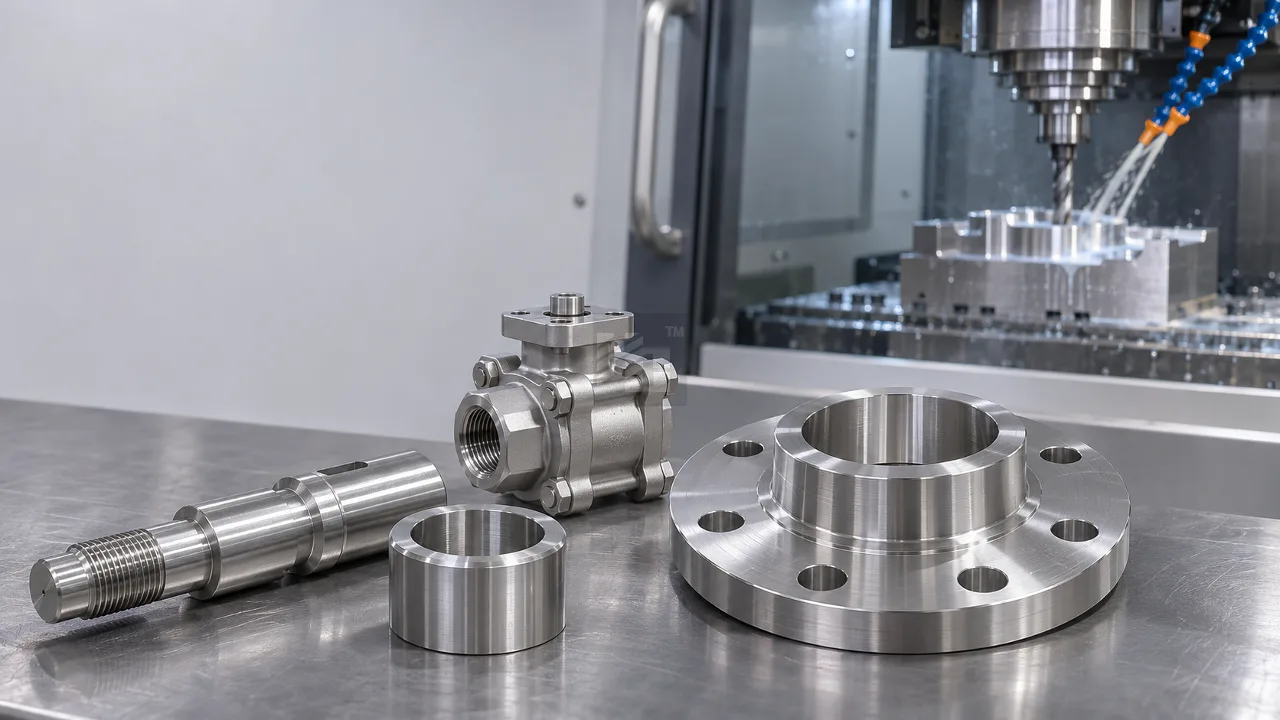
Stainless Steel Raw Materials and Precision Machining for Modern Manufacturing
Stainless steel is one of the most important materials used in modern manufacturing. Known for its corrosion resistance, strength, durability, and attractive surface finish, stainless steel is widely used in medical devices, food processing equipment, chemical machinery, energy systems, marine engineering, industrial automation, semiconductor equipment, and custom machinery.
From stainless steel raw materials to finished precision components, every production step matters. High-quality stainless steel CNC machining helps transform stainless steel bars, plates, tubes, and forgings into custom parts with accurate dimensions, tight tolerances, reliable performance, and consistent surface quality.
Whether you need a prototype, small-batch production, or high-volume stainless steel parts, choosing the right material and machining process is essential.
Common Stainless Steel Raw Materials
Different stainless steel grades offer different advantages in corrosion resistance, machinability, strength, and cost. Selecting the correct material helps improve product performance and reduce manufacturing risks.
304 stainless steel is a popular general-purpose material. It provides good corrosion resistance and formability, making it suitable for food equipment, machinery frames, brackets, fittings, pipes, and general industrial parts.
316 and 316L stainless steel offer stronger corrosion resistance, especially in chemical, marine, medical, and humid environments. 316L stainless steel is commonly used for medical instruments, sanitary valves, pumps, pharmaceutical equipment, marine components, and chemical processing systems.
303 stainless steel is designed for improved machinability. It is often used for CNC turning, precision shafts, threaded parts, screws, connectors, and fittings.
17-4PH stainless steel can achieve high strength and hardness after heat treatment. It is widely used for aerospace components, pump and valve parts, precision mechanical components, and high-strength industrial equipment.
2205 duplex stainless steel and 2507 super duplex stainless steel provide excellent resistance to chloride corrosion, stress corrosion cracking, and high-pressure environments. These materials are commonly used in oil and gas equipment, offshore projects, seawater systems, heat exchangers, and marine engineering.
Stainless Steel CNC Machining Services
Professional stainless steel machining services include CNC turning, CNC milling, drilling, tapping, boring, grinding, wire EDM, and surface finishing. These processes allow manufacturers to produce complex stainless steel components for a wide range of industries.
CNC turning is suitable for shafts, bushings, flanges, valve stems, fittings, threaded components, and other rotational parts. CNC milling is ideal for housings, brackets, manifolds, valve bodies, machine parts, and complex custom components.
For high-precision requirements, 4-axis and 5-axis CNC machining can reduce setups, improve consistency, and machine multiple surfaces in one operation. Grinding and fine finishing can further improve surface roughness, flatness, roundness, and dimensional accuracy.
Because stainless steel can work harden during machining and generate high cutting heat, experienced engineers must use the right cutting tools, cooling methods, machining parameters, and inspection procedures to ensure stable production quality.
Surface Finishing for Stainless Steel Parts
Surface treatment is an important part of stainless steel precision machining. Depending on the application, stainless steel components can receive passivation, electropolishing, mechanical polishing, bead blasting, brushing, heat treatment, ultrasonic cleaning, or laser marking.
Passivation helps improve corrosion resistance by removing free iron from the surface. Electropolishing can reduce surface roughness and improve cleanliness, making it ideal for medical devices, food equipment, pharmaceutical components, and semiconductor applications.
Polishing, brushing, and bead blasting can also improve the appearance and consistency of stainless steel parts, while heat treatment may be required to improve the strength and hardness of materials such as 17-4PH stainless steel.
Applications of Stainless Steel Machined Parts
Stainless steel CNC machined parts are used across many demanding industries.
In the medical industry, 316L stainless steel is often used for surgical instruments, dental components, orthopedic tools, medical equipment parts, and minimally invasive devices. These parts require precise dimensions, burr-free surfaces, and reliable passivation.
In the food, pharmaceutical, and chemical industries, stainless steel is used for sanitary valves, pump housings, pipe fittings, filling equipment, mixing systems, tanks, and fluid handling components. Smooth surfaces and corrosion resistance are essential for hygiene and easy cleaning.
In the energy, oil and gas, and marine industries, duplex stainless steel and super duplex stainless steel are widely used for valves, flanges, pump components, high-pressure fittings, seawater piping, and offshore equipment.
In industrial automation and robotics, stainless steel custom machining is used for fixtures, jigs, sensor housings, robot components, machine frames, brackets, and non-standard automation parts.
In semiconductor and high-end equipment manufacturing, stainless steel is used for vacuum chambers, flanges, fluid system components, precision fixtures, and equipment structures that require cleanliness, dimensional stability, and high surface quality.
Your Stainless Steel Machining Partner
A reliable supplier should provide more than CNC machining. The right manufacturing partner can support stainless steel raw material sourcing, material certificates, CNC precision machining, prototype development, small-batch production, surface treatment, quality inspection, and stable mass production.
When requesting a quotation for custom stainless steel parts, it is helpful to provide drawings, material grade, quantity, tolerance requirements, surface finish requirements, and application details.
From 304 and 316L stainless steel to 2205 duplex stainless steel and 2507 super duplex stainless steel, professional material selection and precision machining can help ensure that every component meets your quality, performance, and delivery requirements.