Export project case
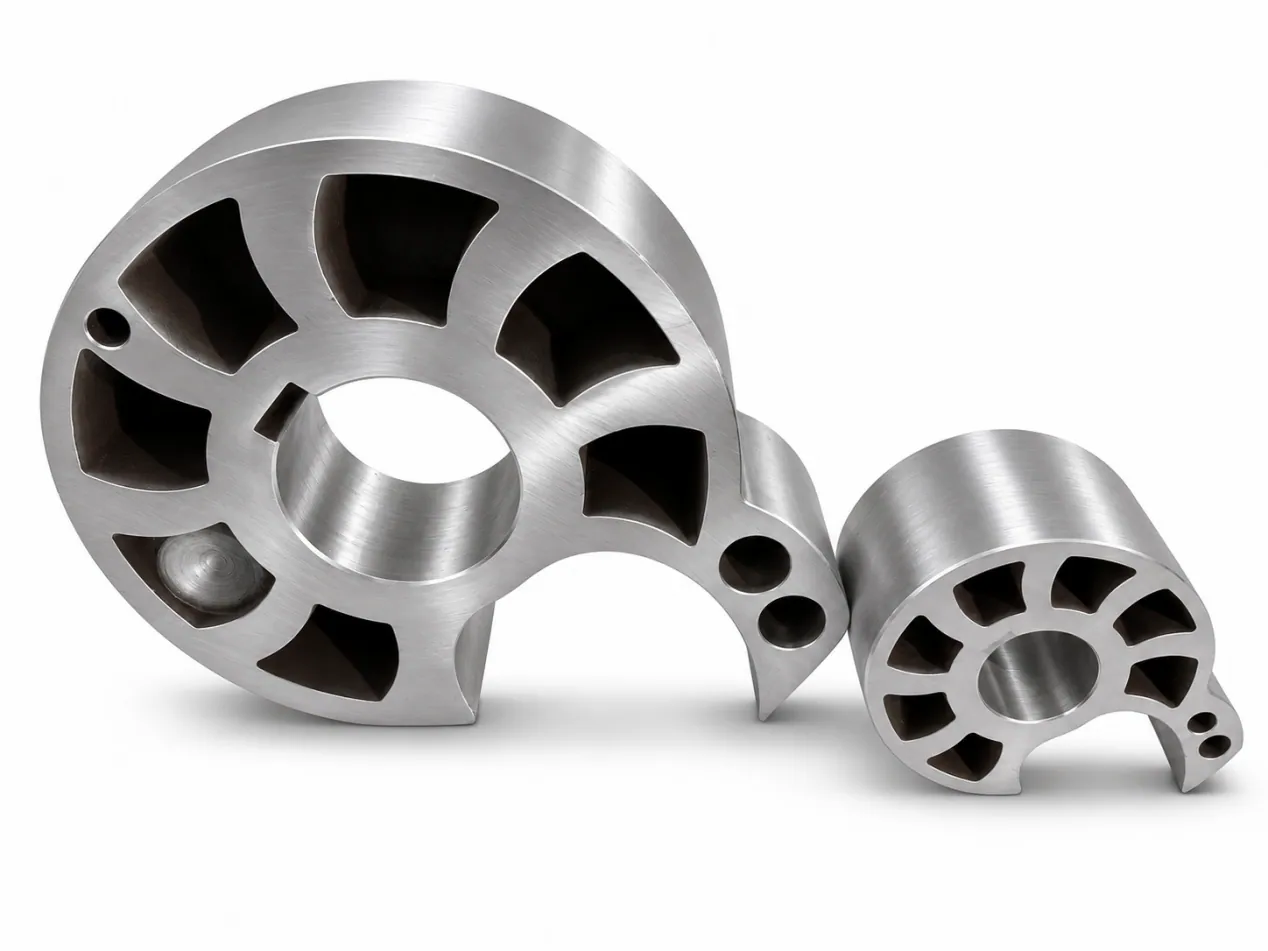
304 Stainless Steel Bearing Cage
1. Project Overview
A German bearing manufacturer purchased custom 304 stainless steel bearing cages for roller bearing assemblies used in industrial equipment.
2. Material Specifications
Material: 304 stainless steel
Product type: Machined roller bearing cage with evenly spaced roller pockets
3. Product Structure & Machining
The cage features a central bore, multiple roller pockets, and positioning holes. It is produced through CNC turning, milling, drilling, and deburring to ensure accurate roller guidance, dimensional consistency, and reliable assembly.
4. Operating Environment
The bearing cages are designed for industrial equipment operating under continuous or intermittent rotation, radial and axial mechanical loads, and long-term lubrication conditions.
Typical operating environments may include manufacturing workshops, pumping stations, gearbox systems, ventilation equipment, and machinery exposed to moderate humidity, water vapor, oil mist, dust, or mild corrosive media. During operation, the cage must maintain stable roller separation and guidance while withstanding vibration, cyclic loading, lubricant contact, and occasional temperature variation.
For this application, the cage surface must remain clean and corrosion-resistant to reduce the risk of rust particles entering the bearing system, affecting lubrication performance, or causing premature wear.
5. Material Properties & Selection
304 stainless steel was selected because it provides good corrosion resistance, toughness, machinability, and surface durability for industrial bearing cage applications.
Its chromium-nickel composition forms a protective passive layer, helping the cage resist oxidation and corrosion in humid environments, oil-mist conditions, and mild corrosive exposure. Compared with ordinary carbon steel, 304 stainless steel reduces the risk of rusting and surface deterioration during storage, transport, assembly, and operation.
In addition, 304 stainless steel offers good CNC machining performance, allowing precise control of roller-pocket geometry, bore size, positioning holes, and burr-free edges. This is important for maintaining roller guidance accuracy and reducing the risk of interference during bearing assembly.
304 is a suitable and cost-effective choice where corrosion resistance and clean surface quality are required, but the bearing is not exposed to high-chloride media, seawater, or severe chemical corrosion. For extreme-speed, extreme-load, or highly corrosive conditions, material selection should be further verified according to bearing design and service requirements.
6. Technical Specifications & Quality
Material verification, dimensional inspection, roller-pocket inspection, bore inspection, positioning-hole inspection, burr removal, surface-quality inspection, and final visual inspection are completed before shipment.