Export project case
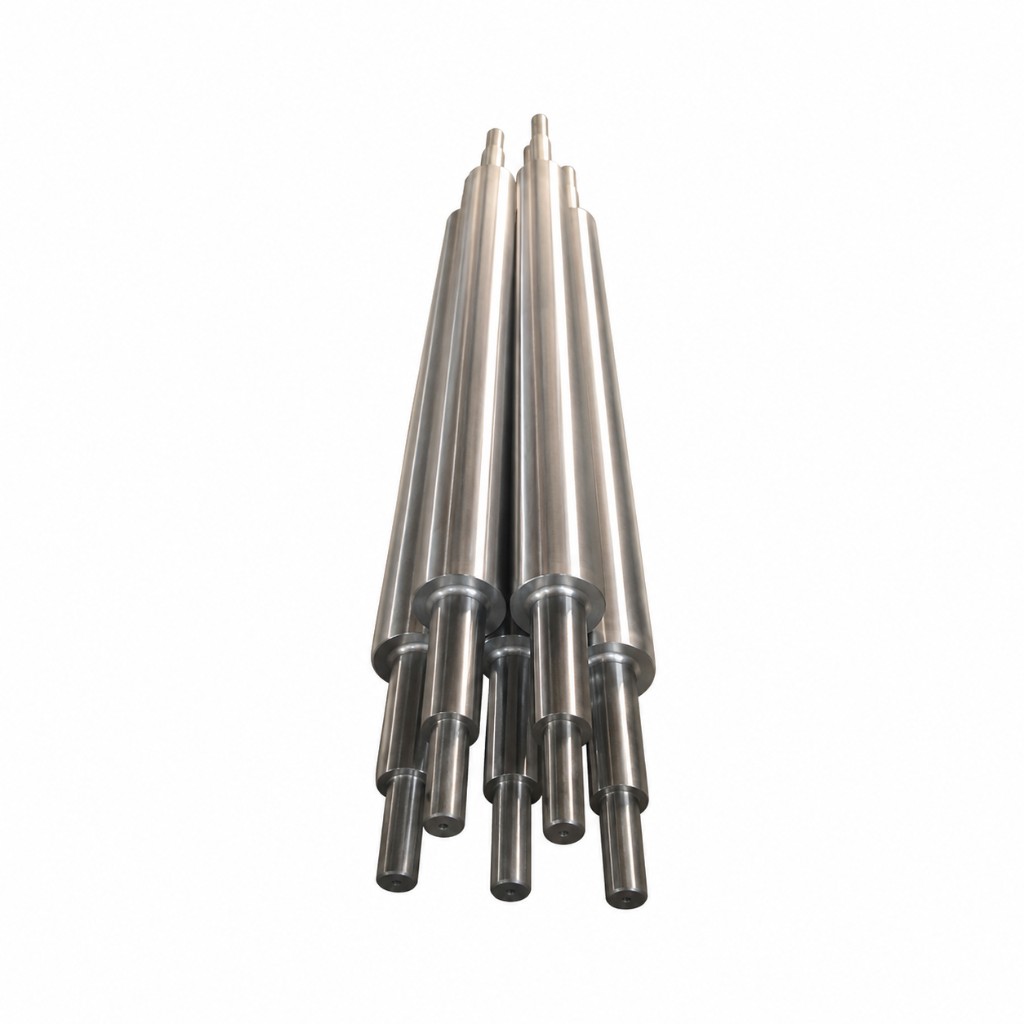
Heat-Resistant Alloy Furnace Roller
1. Project Overview
A South Korean steel manufacturer required custom furnace rollers for a high-temperature steel conveying system. Multiple rollers operate synchronously to transport freshly discharged hot steel products from the furnace to a designated processing area.
2. Material Specifications
Material: Heat-resistant alloy steel / heat-resistant cast alloy (specific grade subject to project requirements)
Product type: Industrial furnace roller
3. Product Structure & Machining
The furnace roller consists of a central cylindrical roller body, stepped shaft sections at both ends, and bearing or transmission connection interfaces. The manufacturing process may include alloy casting, heat treatment, CNC turning, precision machining, cylindrical grinding, and dimensional inspection, depending on the design requirements.
4. Operating Environment
Furnace rollers operate under continuous high-temperature conditions and directly support and convey freshly heated steel products. During operation, they are exposed to high-temperature radiation, repeated thermal cycles, oxidation, mechanical loads, and surface abrasion caused by contact with hot steel and oxide scale.
These conditions can lead to oxidation, thermal fatigue, creep deformation, and surface wear. Therefore, the rollers must maintain structural strength, dimensional stability, and reliable rotational performance to ensure continuous steel conveying and production efficiency.
5. Material Properties & Selection
Heat-resistant alloys are selected for their ability to maintain mechanical strength and structural stability at elevated temperatures. Their chromium-rich compositions provide oxidation resistance, while appropriate alloying elements improve high-temperature strength, creep resistance, and thermal fatigue performance.
These properties help reduce material degradation, deformation, and premature failure during prolonged high-temperature operation. Proper material selection is essential for extending roller service life and reducing maintenance requirements in steel production facilities.
6. Technical Specifications & Quality
Quality control includes material verification, chemical composition review, heat treatment verification where applicable, dimensional inspection, concentricity and straightness checks, surface quality inspection, and final visual inspection. All critical dimensions are checked against the customer's technical drawings.