Nickel Alloy Supplier: Plate, Sheet, Bar, Pipe and Tube
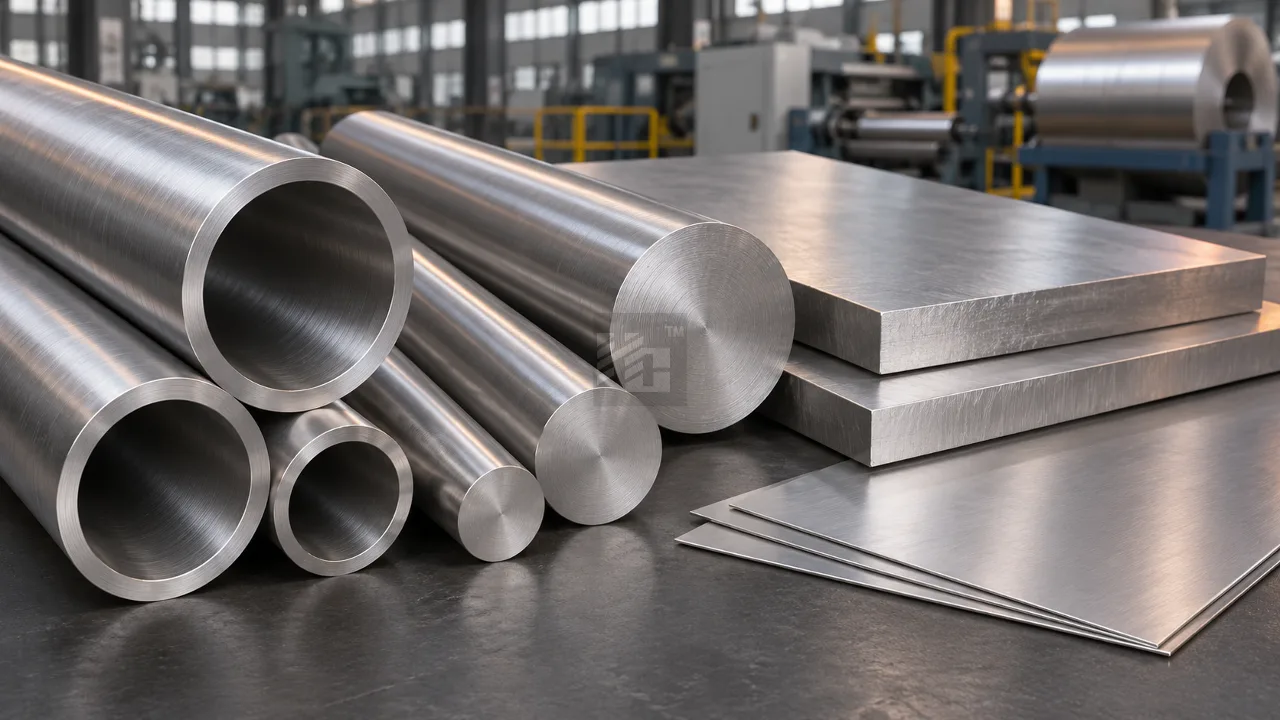
Nickel Alloy Supplier: Plate, Sheet, Bar, Pipe and Tube
HongChen Metal supplies nickel alloy plate, sheet, bar, pipe and tube for chemical processing, oil and gas, marine equipment, heat exchangers and high-temperature applications.
Our product range includes Alloy 625, Alloy 718, Alloy 600, Alloy 825, Alloy C-276, Alloy C-22, Alloy 400, Alloy K-500 and Alloy 800H/800HT. These materials are commonly specified under the INCONEL, INCOLOY, HASTELLOY and MONEL trade names.
Send your required grade, product standard, dimensions, quantity and inspection requirements. We will review the specification and confirm the available supply route, processing options, documentation and delivery schedule in our quotation.
Nickel Alloy Products We Supply
Choosing a supplier starts with confirming the exact product form and specification. A grade available as plate or bar may require a different production route when ordered as seamless tubing or welded pipe.
| Product Form | Typical Purchasing Details | Common Applications |
|---|---|---|
| Plate and sheet | Grade, thickness, width, length, surface condition and cutting requirements | Vessel components, liners, baffles and fabricated equipment |
| Bar and rod | Grade, diameter or section, length, heat-treatment condition and machining allowance | Shafts, fasteners, valve components and machined parts |
| Seamless pipe | Grade, outside diameter or nominal pipe size, wall thickness or schedule, length and standard | Process piping and pressure equipment |
| Seamless tube | Grade, outside diameter, wall thickness, length, tolerances and testing requirements | Heat exchangers and instrument or process systems |
| Welded pipe and tube | Grade, dimensions, welding requirements, heat treatment and inspection scope | Fabricated piping and equipment systems |
Availability depends on the grade, dimensions, quantity and applicable product standard. Please include cut-to-size or drawing-based processing requirements with your inquiry.
Nickel Alloy Grades and Specifications
The following table provides a starting point for procurement. Standards must be matched to the product form, manufacturing route, delivery condition and purchase specification.
| Grade | UNS Number | Material Family | Typical Specification References |
|---|---|---|---|
| Alloy 625 | N06625 | Nickel-chromium-molybdenum-niobium | ASTM B443 plate and sheet; ASTM B444 seamless pipe and tube; ASTM B446 bar and rod |
| Alloy 718 | N07718 | Precipitation-hardenable nickel alloy | ASTM B637 for relevant bar and forging products |
| Alloy 600 | N06600 | Nickel-chromium-iron | Confirm the standard for the required product form |
| Alloy 825 | N08825 | Nickel-iron-chromium with molybdenum and copper | ASTM B424 plate and sheet; ASTM B423 seamless pipe and tube |
| Alloy C-276 | N10276 | Nickel-chromium-molybdenum-tungsten | ASTM B575 plate and sheet; ASTM B574 bar and rod; ASTM B622 seamless pipe and tube |
| Alloy C-22 | N06022 | Nickel-chromium-molybdenum-tungsten | ASTM B575 plate and sheet; ASTM B574 bar and rod; ASTM B622 seamless pipe and tube |
| Alloy 400 | N04400 | Nickel-copper | ASTM B127 plate and sheet; ASTM B164 bar and rod |
| Alloy K-500 | N05500 | Precipitation-hardenable nickel-copper | Confirm the required standard and heat-treatment condition |
| Alloy 800H / 800HT | N08810 / N08811 | Iron-nickel-chromium | Confirm the standard and delivery condition for the required product |
The references above are not interchangeable across all product forms. For example, ASTM B444 and ASTM B622 cover specified seamless products; welded pipe and tube require the appropriate welded-product specification.
Selecting a Nickel Alloy for Your Application
Alloy 625
Alloy 625 combines corrosion resistance with strength and fabrication versatility. Typical applications include chemical-processing equipment, marine components, pollution-control systems and process piping.
For procurement, identify the product form, applicable standard and required delivery condition. Suitability for sour service or other demanding environments must be assessed against the project specification and operating conditions.
Alloy 718
Alloy 718 is selected where high mechanical strength is a major requirement. Applications include shafts, fasteners, valve components and downhole equipment.
Its properties depend on heat treatment. Inquiries should clearly identify the required condition and mechanical-property requirements.
Alloy 600
Alloy 600 is used in heat-treatment equipment and other applications requiring resistance to elevated-temperature oxidation.
Selection should consider the furnace atmosphere, operating temperature and exposure conditions. High-temperature performance does not automatically indicate suitability for aggressive aqueous chloride service.
Alloy 825
Alloy 825 is a nickel-iron-chromium alloy containing molybdenum and copper. It is used in chemical processing, acid-handling equipment, pollution control and certain oil and gas applications.
It is commonly known as INCOLOY alloy 825. The correct UNS designation is N08825.
Alloy C-276 and Alloy C-22
Alloy C-276 and Alloy C-22 are considered for demanding chemical-processing environments where conventional stainless steels may not provide sufficient corrosion resistance.
C-22 generally offers an advantage over C-276 in many oxidizing environments. Final selection requires consideration of the actual chemicals, concentrations, temperatures, contaminants and fabrication condition.
Neither grade should be selected solely from a general description such as “acid resistant” or “chloride resistant.”
Alloy 400 and Alloy K-500
Alloy 400 is a nickel-copper alloy used in marine components, chemical equipment and selected acid-handling applications.
Alloy K-500 belongs to the same nickel-copper family and can achieve higher strength through precipitation hardening. Its heat-treatment condition and application requirements should be specified separately.
Alloy 800H and Alloy 800HT
Alloy 800H and Alloy 800HT are iron-nickel-chromium alloys used in elevated-temperature equipment where creep and stress-rupture properties are important.
They should be ordered against the specified grade, product standard and delivery condition. Alloy 800, 800H and 800HT should not be treated as identical purchasing descriptions.
Nickel Alloys, Stainless Steel and Duplex Steel
Nickel alloys, stainless steels and duplex stainless steels serve different combinations of corrosion, temperature and strength requirements.
A higher alloy content does not make one material the best choice for every application. Depending on the operating conditions, 316L, duplex 2205 or super duplex 2507 may provide an appropriate solution. Other environments may require Alloy 625, Alloy 825, Alloy C-276 or another specified material.
Before selecting or substituting a grade, consider:
- Process chemistry, concentration and contaminants.
- Operating and cleaning temperatures.
- Pressure, mechanical loads and design requirements.
- Chloride exposure, crevices and stagnant conditions.
- Welding, heat treatment and fabrication requirements.
- Applicable project specifications and acceptance criteria.
Application examples on this page are general guidance. Final material selection should be confirmed by the responsible engineer.
Processing, Inspection and Material Documentation
Include processing and inspection requirements at the quotation stage so they can be reviewed with the material specification.
Depending on the product, your inquiry may need to address:
- Cut lengths, plate cutting or drawing-based processing.
- Machining allowance, edge condition and dimensional tolerances.
- Heat-treatment and surface-condition requirements.
- Heat-number identification and traceability.
- EN 10204 3.1 inspection documentation.
- Positive material identification, dimensional inspection or additional testing.
- Packing, marking and shipment requirements.
The quotation should identify which requirements are included and which require separate confirmation.
Request a Nickel Alloy Quotation
For an accurate quotation, please send:
- Material: grade, UNS number and any permitted alternatives.
- Product: plate, sheet, bar, seamless pipe, welded pipe or tube.
- Specification: ASTM, ASME or other required standard and edition.
- Dimensions: thickness, diameter, wall thickness, width and length as applicable.
- Quantity: number of pieces, total length or weight.
- Condition: heat treatment, finish and dimensional tolerances.
- Inspection: required certificates, testing and third-party inspection.
- Delivery: destination, requested schedule and packing requirements.
Attach a drawing when the inquiry includes custom dimensions or processing.
Contact HongChen Metal to request a nickel alloy quotation.
Frequently Asked Questions
What is the difference between nickel alloys and nickel-based alloys?
“Nickel alloys” is a broad commercial category. Nickel-based alloys generally use nickel as the principal base element, while some related materials are classified as nickel-iron-chromium or iron-nickel-chromium alloys.
Nickel content varies significantly by grade. Use the grade designation, UNS number and applicable standard to identify the material accurately.
Is Alloy 825 called Inconel or Incoloy?
Alloy 825 is commonly known as INCOLOY alloy 825, with UNS designation N08825.
Can I replace Alloy C-276 with Alloy 625?
They are not interchangeable by default. Their corrosion performance differs with the process environment. Any substitution requires review of the operating conditions, design requirements and project specification.
What is the difference between nickel alloy pipe and tube?
Pipe is commonly ordered using nominal pipe size and schedule, while tube is commonly specified by outside diameter and wall thickness. The applicable standard determines the detailed dimensional and testing requirements.
Can nickel alloy material be supplied cut to size?
Include the required cut dimensions, tolerances, quantity and edge condition with your inquiry. HongChen Metal will confirm the available processing options and any machining allowance in the quotation.
What affects nickel alloy pricing?
Price depends on the grade, product form, dimensions, quantity, manufacturing route, heat-treatment condition, inspection requirements and delivery terms. Quotes should be compared against the same technical and commercial requirements.